
Explore approaches to stress and mood, including studies that compared a combination with one of its ingredients alone.
Stress, Anxiety & Mood
Explore individual supplements for Stress, Anxiety & Mood, or start with our selected combination.
Explore individual supplements
Browse the options below, or filter by supplement type.
Explore options for everyday stress, anxious feelings and associated low mood. Entries are grouped by relevance, evidence and practical fit; display order is not a proven ranking of effectiveness. Nutritional-shortfall entries address a different need from direct symptom relief. Persistent or disruptive anxiety warrants professional assessment.
Stress and anxiety options
Ashwagandha — Extract Preparations
Botanical extract; formulation-specific evidence

Botanical illustration
HerbCommon Uses ForStress, Anxiety & Mood
- Everyday stress: Some standardized extracts reduce perceived stress during several weeks of use. [1]
- Stress-related poor sleep: May improve sleep when stress and sleep difficulties overlap. [1]
Evidence: Most trials are small and short. Findings depend on the extract; anxiety-disorder benefits and long-term safety remain less certain. [1]
How and Safety
Ashwagandha compounds may influence GABA-related nerve signaling and the body’s response to stress. Much of the mechanistic evidence is from laboratory or animal research, so the explanation remains proposed rather than settled. [1]
Follow directions for the specific root or root-and-leaf extract; check its standardization. [1]
Avoid during pregnancy or breastfeeding; review combinations with sedatives and thyroid medicines. [2]
Additional Ingredient Information: Safety & Toxicity
Use-specific Evidence & Context
Sources for these use-case reasons
Clinical studies have measured perceived stress and, in some cases, cortisol. A lower cortisol reading alone does not establish relief of every stress-related symptom. Study extracts and doses vary. Review the shared safety guidance for liver, thyroid and medication concerns before use.
Common Uses & Evidence
Studies are often small and use different extracts. Results for one standardized preparation do not prove that every root powder or extract has the same effect. [1]
Taking supplements together
Comparing stress formulas. A clinical trial compared an ashwagandha product with a separate multi-herb formula containing rhodiola and holy basil. It offers a way to compare products for stress, without assuming there is a benefit to combining them. Source
References
Form Type
Botanical extract; formulation-specific evidence
Bioavailability & Absorption
No reliable cross-product absorption ranking assigned.
Interactions
General nutrient guidance; not a form-specific treatment dose or finding.
Review sedatives, thyroid medicines, immunosuppressants, and medicines for blood pressure or diabetes with a pharmacist or clinician. [1]
Safety & Toxicity
General nutrient guidance; not a form-specific treatment dose or finding.
Avoid during pregnancy and breastfeeding. Review thyroid or autoimmune conditions and upcoming surgery. Rare liver injury has been reported. Long-term safety remains uncertain. [1]
How and Safety — Details & Sources
The mechanism describes how an ingredient could work. Human studies can tell us which benefits people experience with a particular preparation.
Read the Safety & Toxicity and Interactions sections, where available, for further precautions. The preparation and other ingredients matter.
How and Safety — Sources
Further Form Considerations
Thyroid or autoimmune disorders, upcoming surgery and hormone-sensitive prostate cancer require particular caution. [1]
Lavender — Purpose-Made Oral Preparations
Botanical oral preparation; not aromatherapy oil

Botanical illustration
HerbCommon Uses ForStress, Anxiety & Mood
- Anxiety symptoms: A specific purpose-made oral lavender preparation has reduced symptoms in several placebo-controlled trials. [1]
- Low mood accompanying anxiety: Some studies also report improvement in associated depressive symptoms. [2]
Evidence: The findings concern studied oral products. Aromatherapy oils are different products and should not be swallowed. [2]
How and Safety
Lavender compounds such as linalool affect nerve signaling in experimental research. These proposed actions may contribute to calming effects, but evidence for a purpose-made oral product cannot be transferred to aromatherapy oils. [1]
Use only a purpose-made oral preparation and follow its directions. [1]
Do not swallow aromatherapy or topical oils, or combine oral lavender with sedatives without advice. [2]
Oral products may cause digestive symptoms or headache. Review sedatives and upcoming surgery; pregnancy and breastfeeding safety is uncertain. [2]
Additional Ingredient Information: Use-specific Evidence & Context
Use-specific Evidence & Context
Sources for these use-case reasons
- Kasper et al. (2023) — Silexan meta-analysis of randomized placebo-controlled trials
- NCCIH — Lavender
The studies concern a defined oral lavender oil preparation, commonly described as Silexan, rather than every lavender product. Independent funding and replication, participant diversity and study quality remain limitations. These results do not establish superiority over the other ingredients on this page.
Common Uses & Evidence
Some trials found improvements in anxiety with a standardized oral lavender-oil preparation. Those studies had design and funding limitations. Aromatherapy for sleep is a separate use. [1]
Taking supplements together
Herbs traditionally paired for winding down. European herbal guidance describes teas combining selected herbs such as lemon balm, passionflower, lavender flower and valerian root for mild stress and to aid sleep. That traditional use concerns herbal tea blends. Concentrated extracts and essential oils have different preparations and strengths. Source
References
Form Type
Botanical oral preparation; not aromatherapy oil
Bioavailability & Absorption
No cross-route absorption or effectiveness ranking assigned.
How and Safety — Details & Sources
The mechanism describes how an ingredient could work. Human studies can tell us which benefits people experience with a particular preparation.
Read the Safety & Toxicity and Interactions sections, where available, for further precautions. The preparation and other ingredients matter.
How and Safety — Sources
Further Form Considerations
Do not substitute aromatherapy or topical oils for a purpose-made oral product.
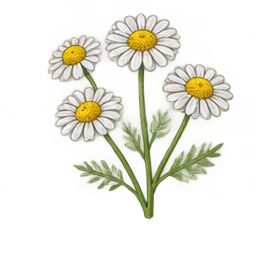
Chamomile — German Chamomile Preparations
Botanical tea / extract
Botanical illustration
HerbCommon Uses ForStress, Anxiety & Mood
- Anxiety symptoms: Studied chamomile extracts may reduce generalized-anxiety symptoms. [1]
- Low mood alongside anxiety: Preliminary studies have also examined associated depressive symptoms. [1]
Evidence: The findings are preliminary and concern extracts; tea has not been shown to provide the same clinical effects. [1]
How and Safety
Chamomile contains apigenin, which interacts with receptors involved in calming nerve signals in laboratory studies. This offers a possible explanation for relaxation effects, although drinking tea and taking concentrated extracts provide different exposures. [1]
Prepare tea or use an oral extract according to its own directions; check the plant and preparation. [3]
Do not use a known allergy-triggering preparation; review combining it with sedating medicines. [2]
Allergy risk is higher with related-plant allergies. Review warfarin and sedating medicines; pregnancy safety is uncertain. [2]
Additional Ingredient Information: Safety & Toxicity
Use-specific Evidence & Context
Sources for these use-case reasons
Keep the specific preparation in view: tea and concentrated extracts differ. Preliminary anxiety findings do not establish a reliable treatment or a guaranteed daytime, non-drowsy effect.
Common Uses & Evidence
Small studies of specific oral chamomile extracts suggest some people experience fewer anxiety symptoms. Traditional use as a bedtime tea is a separate use and preparation. [1]
Taking supplements together
Chamomile and apigenin. Chamomile naturally contains apigenin compounds. Drinking chamomile and taking isolated apigenin are different exposures. Chamomile’s traditional use for winding down does not establish an extra benefit from adding a separate apigenin supplement. Source 1 · Source 2
References
Form Type
Botanical tea / extract
Bioavailability & Absorption
No evidence-based absorption ranking assigned.
Interactions
General nutrient guidance; not a form-specific treatment dose or finding.
Reported interactions include warfarin and some liver-metabolized medicines; sedative and estrogen-related concerns also warrant review. [1]
Safety & Toxicity
General nutrient guidance; not a form-specific treatment dose or finding.
Allergic reactions, including severe reactions, can occur, particularly with related-plant allergies. Pregnancy and breastfeeding safety is not established. [1]
How and Safety — Details & Sources
The mechanism describes how an ingredient could work. Human studies can tell us which benefits people experience with a particular preparation.
Read the Safety & Toxicity and Interactions sections, where available, for further precautions. The preparation and other ingredients matter.
How and Safety — Sources
Further Form Considerations
Allergy risk is higher with related-plant allergies. Review warfarin and sedating medicines; pregnancy safety is uncertain.
Safety sources: 1
Lemon Balm — Extract Preparations
Botanical extract

Botanical illustration
HerbCommon Uses ForStress, Anxiety & Mood
- Feeling calmer under stress: A small laboratory study found increased calmness after an extract. [1]
- Traditional mild-stress relief: Melissa leaf has a longstanding use for temporary mild stress. [2]
Evidence: The study measured the response to a single dose in healthy adults; longer-term anxiety treatment needs further study. [1]
How and Safety
Lemon balm compounds can reduce the breakdown of GABA, a calming nerve messenger, in laboratory experiments. This is a proposed explanation for its traditional relaxation and sleep uses, rather than a proven mechanism in people. [1]
Follow the preparation directions for leaf tea or the specific extract; assess its effect on alertness. [2]
Do not drive or operate machinery if it causes drowsiness. [2]
Additional Ingredient Information: Common or Studied Dosage, Safety & Toxicity
Use-specific Evidence & Context
Sources for these use-case reasons
- Kennedy et al. (2004) — Lemon balm and laboratory-induced stress
- EMA — Melissa leaf: traditional stress and sleep uses
The study measured the response to a single dose in healthy adults; longer-term anxiety treatment needs further study. [1]
Common Uses & Evidence
A crossover experiment in 18 healthy volunteers tested single standardized-extract doses. Results should not be presented as proof of clinical anxiety or insomnia treatment. [1]
Taking supplements together
References
Form Type
Botanical extract
Bioavailability & Absorption
No evidence-based comparative absorption score assigned.
Common or Studied Dosage
Preparation-specific amount: The EMA monograph gives separate amounts for tea, leaf powder, liquid extract and tincture; these cannot be substituted milligram for milligram. For example, its defined 1:1 liquid extract uses 2–4 mL, one to three times daily. This does not establish the dose of an unspecified concentrated capsule. Use the exact preparation’s directions. [2]
Interactions
The EMA monograph reports that interaction data were unavailable. Laboratory and animal findings suggest an effect on thyroid-stimulating hormone activity, but its importance in people is unknown. This is not proof of a clinical thyroid-drug interaction. Have the exact extract and medicine combination checked if you use thyroid treatment or other regular medicines. [2]
Safety & Toxicity
The EMA monograph does not recommend medicinal use during pregnancy or breastfeeding because safety data are insufficient, and use below age 12 is not established. Avoid use with a known allergy to the preparation. Lemon balm may impair driving or machinery use; do not drive if affected. Seek advice if symptoms worsen or persist beyond two weeks. [2]
How and Safety — Details & Sources
The mechanism describes how an ingredient could work. Human studies can tell us which benefits people experience with a particular preparation.
Read the Safety & Toxicity and Interactions sections, where available, for further precautions. The preparation and other ingredients matter.
How and Safety — Sources
- Research reference — Lemon Balm: mechanism and clinical context
- Preparation instructions and practical precautions
- Kennedy et al. 2004 — Lemon Balm and Laboratory-Induced Stress
- Community herbal monograph on Melissa officinalis L., folium (2013)
- Product label example — follow directions for your own preparation
- Product label example — follow directions for your own preparation
Passionflower — Oral Preparations
Botanical preparation

Botanical illustration
HerbCommon Uses ForStress, Anxiety & Mood
- Anxious feelings: Small studies suggest possible relief of anxiety symptoms. [1]
Evidence: The trials are small, so the benefit remains uncertain. [1]
How and Safety
Passionflower constituents affect GABA-related nerve signaling in laboratory studies. This may help explain calming or sedating effects, but the precise mechanism and clinical benefits remain uncertain. [1]
Follow the directions for the oral preparation and first assess whether it causes drowsiness. [3]
Avoid during pregnancy; do not combine with sedatives or use around anesthesia without medical advice. [2]
Avoid during pregnancy. Can add to sedation from anesthesia; tell the surgical team about use within two weeks of a procedure. [2]
Additional Ingredient Information: Safety & Toxicity
Use-specific Evidence & Context
Sources for these use-case reasons
The trials are small, so the benefit remains uncertain. [1]
Common Uses & Evidence
Passionflower has a tradition of use for winding down. Small sleep studies have measured different outcomes, including falling asleep and staying asleep, with varying results. [1]
Taking supplements together
Herbs traditionally paired for winding down. European herbal guidance describes teas combining selected herbs such as lemon balm, passionflower, lavender flower and valerian root for mild stress and to aid sleep. That traditional use concerns herbal tea blends. Concentrated extracts and essential oils have different preparations and strengths. Source
References
Form Type
Botanical preparation
Bioavailability & Absorption
No evidence-based comparative absorption score assigned.
Interactions
Passionflower can add to nervous-system slowing from anesthesia and medicines used around surgery. Tell the surgical team if you have used it within two weeks of a planned procedure. [1]
Side Effects
Drowsiness, dizziness and confusion can occur. [1]
Safety & Toxicity
Pregnancy: Do not use passionflower because it may trigger uterine contractions. Breastfeeding safety is uncertain. Research on short-term tea or extract use does not establish long-term safety for every preparation. [1]
How and Safety — Details & Sources
The mechanism describes how an ingredient could work. Human studies can tell us which benefits people experience with a particular preparation.
Read the Safety & Toxicity and Interactions sections, where available, for further precautions. The preparation and other ingredients matter.
How and Safety — Sources
Further Form Considerations
Avoid during pregnancy. Can add to sedation from anesthesia; tell the surgical team about use within two weeks of a procedure.
Safety sources: 1