
Muscle Strength & Development
Build strength with progressive resistance training, enough food and adequate protein. Compare supplements that support training, recovery or a specific nutritional gap.
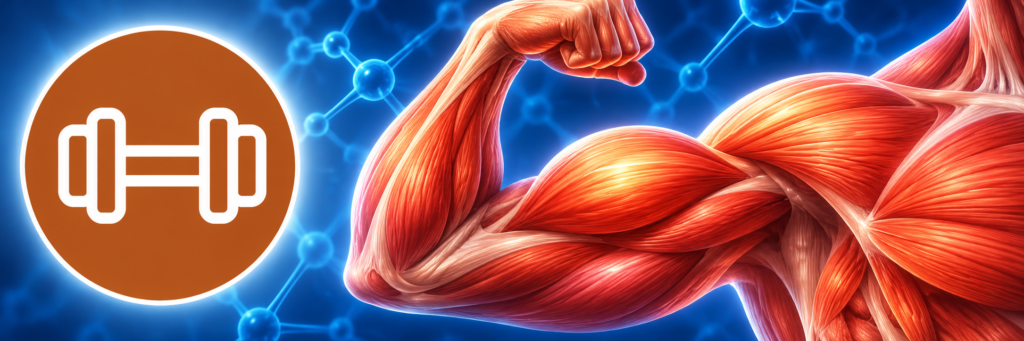
Protein and creatine have the clearest roles in this selection. Vitamins and minerals are conditional choices when intake or status is inadequate. The core is an editable starting point, not a requirement to take every item.
Timing notes: Spread protein through the day and use creatine consistently. Match other products to their food and medicine-spacing instructions; no single post-workout minute determines the result.
Explore individual supplements
Browse the options below, or filter by supplement type.
Start with the options most relevant to the goal, then consider nutritional gaps and optional additions. Order is an editorial guide, not a proven head-to-head ranking.
Provides protein for muscle repair and growth
Protein — Whey and Plant Preparations
Dietary protein

Representative illustration. Product appearance varies.
Other SupplementCommon Uses ForMuscle Strength & Development
Provides protein for muscle repair and growth
Evidence: Supplemental protein can improve resistance-training gains when it helps meet protein needs. More is not automatically better once intake is adequate. Evidence source
For this goal: Choose whey or a complete plant blend according to dietary preferences and allergies; kidney disease needs an individual protein plan.
How and Safety
Protein is digested into amino acids used to build and repair tissues, including muscle. Adequate protein and resistance exercise work together to stimulate muscle protein synthesis. [1]
Use to fill a food-intake gap, mixing as directed; spread protein-containing meals or servings through the day. [1]
Choose a source that suits your allergies and coordinate timing with your prescriber if you use levodopa. [2]
Additional Ingredient Information: Safety & Toxicity
Use-specific Evidence & Context
Provides protein for muscle repair and growth
Evidence: Supplemental protein can improve resistance-training gains when it helps meet protein needs. More is not automatically better once intake is adequate. Evidence source
For this goal: Choose whey or a complete plant blend according to dietary preferences and allergies; kidney disease needs an individual protein plan.
Common Uses & Evidence
Adequate total protein matters; supplements are optional when food provides enough. [1]
Taking supplements together
Complete protein and amino acid blends
References
Form Type
Dietary protein
Bioavailability & Absorption
No evidence-based comparative absorption score assigned.
Interactions
Dietary protein can reduce levodopa absorption and its effect in some people with Parkinson’s disease. If you take levodopa, discuss protein-powder timing with your treating team, particularly if doses seem less effective after protein intake. Do not reduce needed nutrition or change medication dosing on your own; the protein effect does not occur in everyone. [3]
Safety & Toxicity
General nutrient guidance; not a form-specific treatment dose or finding.
More than needed does not automatically add benefit. [1]
How and Safety — Details & Sources
The mechanism describes how an ingredient could work. Human studies can tell us which benefits people experience with a particular preparation.
Read the Safety & Toxicity and Interactions sections, where available, for further precautions. The preparation and other ingredients matter.
How and Safety — Sources
Further Form Considerations
Check source and dietary suitability.
Supports strength and repeated high-intensity effort
Creatine Monohydrate
Sports nutrition compound
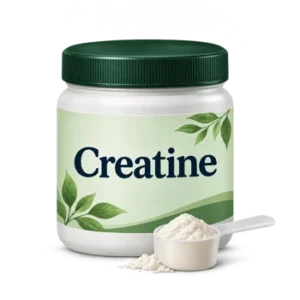
Representative illustration. Product appearance varies.
Other SupplementCommon Uses ForMuscle Strength & Development
Supports strength and repeated high-intensity effort
Evidence: Creatine monohydrate has substantial evidence for improving training capacity and strength gains alongside exercise. Evidence source
For this goal: Water-related weight gain is possible; it is not the same as fat gain.
How and Safety
Creatine increases muscle stores of phosphocreatine, which helps rapidly regenerate the energy molecule ATP. This supports repeated short bursts of demanding exercise and can improve training gains over time. [1]
Check blend ingredients: stimulant-containing pre-workouts have additional considerations beyond plain creatine. [2]
Additional Ingredient Information: Common or Studied Dosage, Safety & Toxicity
Use-specific Evidence & Context
Supports strength and repeated high-intensity effort
Evidence: Creatine monohydrate has substantial evidence for improving training capacity and strength gains alongside exercise. Evidence source
For this goal: Water-related weight gain is possible; it is not the same as fat gain.
Common Uses & Evidence
Evidence is stronger for intermittent intense activity than for endurance. [1]
Taking supplements together
Protein and creatine retention. In a short human study, creatine taken with protein and carbohydrate increased whole-body creatine retention versus creatine with a smaller carbohydrate serving. The comparison measured retention, so it does not tell us how much extra strength a shake would produce. Source
References
Form Type
Sports nutrition compound
Bioavailability & Absorption
No evidence-based comparative absorption score assigned.
Common or Studied Dosage
Common maintenance amount: 3–5 g/day in adult exercise protocols. Some protocols first use 20 g/day in divided portions for 5–7 days. [2]
Interactions
Evidence on combining creatine and caffeine is mixed. Mayo Clinic notes that caffeine might reduce creatine’s effect, but more research is needed; this should not be presented as a proven dangerous interaction for everyone. People with Parkinson’s disease should discuss the combination with their treating team because findings from that population raise a separate concern. [3]
Safety & Toxicity
Water-related weight gain is common. Medical conditions and long-term use require an individual assessment. [2]
How and Safety — Details & Sources
The mechanism describes how an ingredient could work. Human studies can tell us which benefits people experience with a particular preparation.
Read the Safety & Toxicity and Interactions sections, where available, for further precautions. The preparation and other ingredients matter.
How and Safety — Sources
Urolithin A — Preparation Overview
Supplement preparation

Illustrative image; product appearance varies.
Other SupplementCommon Uses ForMuscle Strength & Development
Muscle endurance in older adults: Urolithin A may help muscles sustain repeated contractions. A 66-person randomized trial found improvement in some secondary endurance measures; its main walking-distance and muscle ATP-production outcomes did not show a significant advantage over placebo. Trial.
Healthy-aging research: It is studied for mitochondrial quality control. These findings support an optional muscle-aging discussion, not a claim that it extends human lifespan or builds muscle mass.
How and Safety
Urolithin A is studied for stimulating mitophagy, the removal of damaged mitochondria. Early human studies show some muscle-related signals, but these do not establish a general anti-aging benefit. [1]
Follow the studied product’s directions where available; check actual urolithin A rather than fruit-extract weight. [3]
Check the labeled urolithin A amount; pomegranate extracts do not supply a predictable equivalent amount. [1]
In a 66-person trial, 1,000 mg/day for four months had a similar adverse-event profile to placebo. That study does not settle longer-term safety or use in people outside its selected population. Its research dose is not a universal recommendation. Trial.
Potential combinations: Protein and creatine have different nutritional or performance roles, and NR supplies an NAD+ precursor. These can be complementary ideas, but improved outcomes from adding urolithin A to those supplements have not been established in direct human combination trials.Medication interactions: Published human interaction data are limited. Short trials with selected participants cannot establish compatibility with all prescription medicines or multiple-supplement stacks. No specific interaction was established by the older-adult trial; that is different from demonstrating that none exist. Trial.
Additional Ingredient Information: Safety & Toxicity
Use-specific Evidence & Context
Potential combinations: Protein and creatine have different nutritional or performance roles, and NR supplies an NAD+ precursor. These can be complementary ideas, but improved outcomes from adding urolithin A to those supplements have not been established in direct human combination trials.
Medication interactions: Published human interaction data are limited. Short trials with selected participants cannot establish compatibility with all prescription medicines or multiple-supplement stacks. No specific interaction was established by the older-adult trial; that is different from demonstrating that none exist. Trial.
References
Common Uses & Evidence
Muscle endurance in older adults: Urolithin A may help muscles sustain repeated contractions. A 66-person randomized trial found improvement in some secondary endurance measures; its main walking-distance and muscle ATP-production outcomes did not show a significant advantage over placebo. Trial.
Healthy-aging research: It is studied for mitochondrial quality control. These findings support an optional muscle-aging discussion, not a claim that it extends human lifespan or builds muscle mass.
References
Form Type
Supplement preparation
Bioavailability & Absorption
A comparative absorption score is not assigned to this broad preparation overview.
Interactions
Potential combinations: Protein and creatine have different nutritional or performance roles, and NR supplies an NAD+ precursor. These can be complementary ideas, but improved outcomes from adding urolithin A to those supplements have not been established in direct human combination trials.
Medication interactions: Published human interaction data are limited. Short trials with selected participants cannot establish compatibility with all prescription medicines or multiple-supplement stacks. No specific interaction was established by the older-adult trial; that is different from demonstrating that none exist. Trial.
Safety & Toxicity
In a 66-person trial, 1,000 mg/day for four months had a similar adverse-event profile to placebo. That study does not settle longer-term safety or use in people outside its selected population. Its research dose is not a universal recommendation. Trial.
How and Safety — Details & Sources
Combinations and interactions
Potential combinations: Protein and creatine have different nutritional or performance roles, and NR supplies an NAD+ precursor. These can be complementary ideas, but improved outcomes from adding urolithin A to those supplements have not been established in direct human combination trials.
Medication interactions: Published human interaction data are limited. Short trials with selected participants cannot establish compatibility with all prescription medicines or multiple-supplement stacks. No specific interaction was established by the older-adult trial; that is different from demonstrating that none exist. Trial.
Safety
In a 66-person trial, 1,000 mg/day for four months had a similar adverse-event profile to placebo. That study does not settle longer-term safety or use in people outside its selected population. Its research dose is not a universal recommendation. Trial.
Further Form Considerations
Visual References
Development visual references. These generic images do not identify the chemical composition or appearance of this specific form. Verification is pending.
Frequently asked questions
What mineral form is best for muscles?
Muscles need several minerals, including magnesium, calcium and potassium, rather than one winning form. Correcting an inadequate intake helps normal function, but extra minerals are not a shortcut to muscle growth. For a magnesium supplement, choose an appropriate elemental amount and a form you tolerate. Muscle-development planning should put resistance exercise, sufficient energy and protein first; creatine monohydrate is a separate option with evidence for training support. New weakness or persistent cramps should not automatically be attributed to magnesium deficiency.
Sources: ods.od.nih.gov · ods.od.nih.gov