
Explore Black Seed Oil
See how this form is used, what to look for on the label, and where to find it.
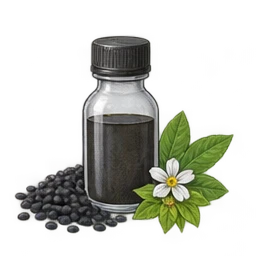
Black seed has traditional uses for respiratory and inflammatory complaints. Human studies of particular seed or oil preparations have also explored blood sugar and other metabolic measures. Sources: MSK: Nigella sativa
See how this ingredient works with other supplements
Product-label examples help you compare available strengths. The appropriate daily amount depends on your needs; formulations and availability vary by country.
Black Seed Oil — Preparation Overview
Supplement preparation
Botanical illustration
HerbCommon Uses
Traditional uses*: Black seed has a long history of customary use for inflammatory and respiratory complaints.
Blood sugar and metabolic health: Small trials suggest improvements in some glucose and lipid measures; findings vary by preparation.
Respiratory symptoms: Studied as an adjunct for asthma and allergies, with preliminary benefits. It does not replace inhalers or other treatment.
Joint comfort: Small studies of oral oil suggest possible improvement in arthritis symptoms.
Skin applications: Some topical preparations have been studied separately. These findings do not establish that oral oil treats acne, psoriasis or hair loss.
Sources: MSK: Nigella sativa
Common OTC Strengths
1,000 mg black seed oil.
Label sources: 1
Look for Nigella sativa (black seed) and check whether the product is oil or extract. If both labels give a thymoquinone amount or percentage, compare the figures using the same unit.
No general maximum is stated for this preparation. Check its specific safety guidance below.
* See additional info below: Black Seed Oil — Preparation Overview safety details. Upper limits are safety ceilings, not intake targets. Age and health conditions affect suitability.
How and Safety
Black seed oil contains thymoquinone and other compounds that affect inflammatory and antioxidant pathways in experimental studies. These proposed mechanisms do not establish that every oil or extract produces the same benefits in people. [1]
Use an oral preparation as directed; whole seeds, fixed oil and concentrated extracts differ. [3]
Choose a labeled oral fixed-oil product; concentrated essential oils are different preparations. [2]
Trusted Sources
Simple tests to be certain of your individual needs.
Coming soon
Additional Ingredient Information: Safety & Toxicity
Common Uses & Evidence
Clinical studies examine Nigella sativa in different preparations. Consider the preparation and medical context rather than transferring results to every oil or capsule. [1]
Taking supplements together
References
Form Type
Supplement preparation
Bioavailability & Absorption
A comparative absorption score is not assigned to this broad preparation overview.
Interactions
Laboratory findings suggest black seed constituents can affect CYP2D6 and CYP3A4 drug-metabolizing enzymes, and raise a possible interaction with warfarin. The clinical importance remains uncertain. Have a pharmacist review the exact product with your medicines, particularly treatments requiring careful dose monitoring. [2]
Safety & Toxicity
Black-seed oil has caused allergic skin reactions when applied topically, including a reported systemic reaction. High-dose animal findings raise liver-toxicity concerns, but do not establish a safe upper dose for people. Safety cannot be assumed across concentrated oils, extracts and routes of use. [2]
How and Safety — Details & Sources
The mechanism describes how an ingredient could work. Human studies can tell us which benefits people experience with a particular preparation.
Read the Safety & Toxicity and Interactions sections, where available, for further precautions. The preparation and other ingredients matter.
How and Safety — Sources
*Traditional uses: Documented customary uses help explain why people choose an ingredient. This history of use is distinct from clinical-trial findings; the evidence for each use is described above.
Black Seed Oil — common questions
What is Black Seed Oil commonly used for?
Traditional uses*: Black seed has a long history of customary use for inflammatory and respiratory complaints.
Blood sugar and metabolic health: Small trials suggest improvements in some glucose and lipid measures; findings vary by preparation.
Respiratory symptoms: Studied as an adjunct for asthma and allergies, with preliminary benefits. It does not replace inhalers or other treatment.
Joint comfort: Small studies of oral oil suggest possible improvement in arthritis symptoms.
Skin applications: Some topical preparations have been studied separately. These findings do not establish that oral oil treats acne, psoriasis or hair loss.
Sources: MSK: Nigella sativa
How well is Black Seed Oil absorbed?
A comparative absorption score is not assigned to this broad preparation overview.
What should I look for on the label for Black Seed Oil?
Look for Nigella sativa (black seed) and check whether the product is oil or extract. If both labels give a thymoquinone amount or percentage, compare the figures using the same unit.
Which medicines or supplements can interact with Black Seed Oil?
Laboratory findings suggest black seed constituents can affect CYP2D6 and CYP3A4 drug-metabolizing enzymes, and raise a possible interaction with warfarin. The clinical importance remains uncertain. Have a pharmacist review the exact product with your medicines, particularly treatments requiring careful dose monitoring. [2]
Who should take extra care with Black Seed Oil?
Black-seed oil has caused allergic skin reactions when applied topically, including a reported systemic reaction. High-dose animal findings raise liver-toxicity concerns, but do not establish a safe upper dose for people. Safety cannot be assumed across concentrated oils, extracts and routes of use. [2]