
Explore Collagen Peptides
See how this form is used, what to look for on the label, and where to find it.
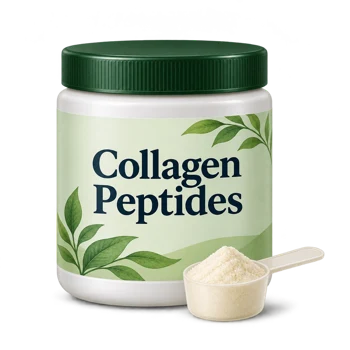
People use collagen peptides for skin moisture and joint comfort. Some trials report improvements in those outcomes, with results that depend on the product and study quality. [2]
See how this ingredient works with other supplements
Product-label examples help you compare available strengths. The appropriate daily amount depends on your needs; formulations and availability vary by country.
Collagen — Hydrolyzed Peptides
Protein-derived peptide preparation
Representative illustration. Product appearance varies.
Other SupplementCommon Uses
Joint comfort: Trials of collagen products suggest modest improvements in osteoarthritis pain and function, although preparations differ.
Skin appearance: Often used for hydration and elasticity. Favorable findings are less convincing in independent, higher-quality trials.
Protein contribution: Provides amino acids, but is not a complete protein and should not be the main protein source for muscle rebuilding.
Scope: Results from undenatured collagen or specialized products cannot automatically be applied to every collagen-peptide powder.
Sources: Joint trials review · Skin review
Common OTC Strengths
10 g hydrolyzed collagen peptides per serving in a checked powder.
Label sources: 1
Find hydrolyzed collagen peptides and read the grams of collagen per serving. Check the animal source and allergen statement. The weight of a whole scoop may include flavoring or other ingredients.
No general maximum is stated for this preparation. Check its specific safety guidance below.
* See additional info below: Collagen — Hydrolyzed Peptides safety details. Upper limits are safety ceilings, not intake targets. Age and health conditions affect suitability.
How and Safety
Digestion breaks collagen peptides into amino acids and smaller peptides that the body can use. Some peptides also affect connective-tissue cells in laboratory studies, but taking collagen does not deliver intact collagen directly to joints or skin. [1]
Mix hydrolyzed powder into food or a drink as directed; check the animal or marine source. [5]
Include complete protein in your diet alongside collagen, and check the collagen source for known allergens. [2]
Trusted Sources
Simple tests to be certain of your individual needs.
Coming soon
Additional Ingredient Information: Safety & Toxicity
Common Uses & Evidence
Pooled skin results were positive, but higher-quality and non-industry-funded subsets did not establish the same effect. The specific preparation and evidence matter. [2]
Taking supplements together
References
Form Type
Protein-derived peptide preparation
Bioavailability & Absorption
No useful comparative absorption score is assigned to this broad preparation category.
Safety & Toxicity
Check the source species and allergen information. A published case describes anaphylaxis after hydrolyzed fish collagen, so “hydrolyzed” should not be taken to mean safe for someone with a relevant allergy. Fish-derived, bovine and other collagen preparations are not interchangeable for allergy assessment. [3]
How and Safety — Details & Sources
The mechanism describes how an ingredient could work. Human studies can tell us which benefits people experience with a particular preparation.
Read the Safety & Toxicity and Interactions sections, where available, for further precautions. The preparation and other ingredients matter.
How and Safety — Sources
- Research reference — Collagen Peptides: mechanism and clinical context
- Proksch et al. 2014 — Specific Collagen Peptides and Skin Physiology
- Myung et al. 2025 — Collagen Supplements and Skin Aging
- Anaphylaxis provoked by ingestion of hydrolyzed fish collagen
- Product label example — follow directions for your own preparation
Collagen Peptides — common questions
What is Collagen Peptides commonly used for?
Joint comfort: Trials of collagen products suggest modest improvements in osteoarthritis pain and function, although preparations differ.
Skin appearance: Often used for hydration and elasticity. Favorable findings are less convincing in independent, higher-quality trials.
Protein contribution: Provides amino acids, but is not a complete protein and should not be the main protein source for muscle rebuilding.
Scope: Results from undenatured collagen or specialized products cannot automatically be applied to every collagen-peptide powder.
Sources: Joint trials review · Skin review
How well is Collagen Peptides absorbed?
No useful comparative absorption score is assigned to this broad preparation category.
What should I look for on the label for Collagen Peptides?
Find hydrolyzed collagen peptides and read the grams of collagen per serving. Check the animal source and allergen statement. The weight of a whole scoop may include flavoring or other ingredients.
Who should take extra care with Collagen Peptides?
Check the source species and allergen information. A published case describes anaphylaxis after hydrolyzed fish collagen, so “hydrolyzed” should not be taken to mean safe for someone with a relevant allergy. Fish-derived, bovine and other collagen preparations are not interchangeable for allergy assessment. [3]
How does Collagen Peptides work?
Digestion breaks collagen peptides into amino acids and smaller peptides that the body can use. Some peptides also affect connective-tissue cells in laboratory studies, but taking collagen does not deliver intact collagen directly to joints or skin. [1]
What strengths of Collagen Peptides appear on supplement labels?
10 g hydrolyzed collagen peptides per serving in a checked powder.
Label sources: 1
What does hydrolyzed collagen mean?
Hydrolysis breaks collagen into smaller peptides. The term describes processing. It does not tell you which effects have been demonstrated for a particular product. Reference
What do skin studies actually measure?
Trials commonly measure skin hydration and elasticity. Those outcomes differ from treating a skin condition or proving a visible change in every user. Reference
Are the results from one collagen powder transferable to another?
Check the source, preparation and serving against the one studied. Research on a particular peptide preparation and follow-up period cannot establish the same result for every powder. Reference
Does a collagen study show how quickly I will see a difference?
A trial measures changes at scheduled visits and compares groups. Its follow-up period does not predict when an individual will notice a change. Reference
What should I know about combining Collagen Peptides with other supplements?
Additional ingredient information
Preparation notes
Hydrolyzed collagen peptides from different animal sources.
Upper Limit and Toxicity
Check the source and allergens. A small short trial does not establish comprehensive long-term safety. [1]
Evidence Strength
A 2025 review found overall improvements in skin outcomes, while independent and higher-quality subsets did not show the same benefit. [2]