
Compare Vitamin B6 Forms
Compare forms and their uses to find the right form for you.
Vitamin B6 helps process amino acids, make hemoglobin and produce chemical messengers used by nerves. Product labels list more than one form of B6. [1]
See how this ingredient works with other supplements
Vitamin B6 at a glance
A quick comparison before you explore the details below.
| Form | Common reasons to choose it | Key difference | Explore form |
|---|---|---|---|
| Vitamin B6 Pyridoxal-5-Phosphate | Vitamin B6 supply; Normal function. | An active-form label does not demonstrate an absorption advantage. [1] | See Form Details ↓: Vitamin B6 — Pyridoxal-5-Phosphate |
| Vitamin B6 Pyridoxine Hydrochloride | Normal metabolism; Low B6. | No substantial absorption difference among supplemental B6 forms is established in NIH's review. [1] | See Form Details ↓: Vitamin B6 — Pyridoxine Hydrochloride |
Explore each form
Vitamin B6 — Pyridoxal-5-Phosphate
Coenzyme form; PLP or P-5-P. [1]
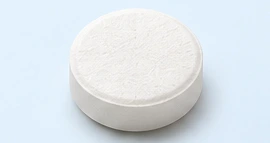
Illustrative rendering. Actual products may look different.
VitaminNo substantial absorption difference is established.
Common Uses
Vitamin B6 supply: Helps meet B6 needs.
Normal function: Supports amino-acid metabolism, hemoglobin and neurotransmitter production.
An active-coenzyme label does not establish better symptom relief than pyridoxine or protection from the nerve-injury risk of excessive B6. [1]
Dosage and Label
OTC label strength*:33–50 mg declared vitamin B6 in checked products.
Adult limits differ: U.S. 100 mg/day; EFSA 12 mg/day, from all sources. Excess B6 can damage nerves. [1]
† Upper limits are safety ceilings, not intake targets. Age and health conditions affect suitability. See additional info below: Vitamin B6 — Pyridoxal-5-Phosphate safety details.
Read the Vitamin B6 line for the amount of B6 per serving. For example, one product lists 50 mg of P-5-P and 33 mg of vitamin B6. Use the 33 mg figure when comparing B6 amounts.
Click below to see age-based dosages.
See Dosage Table: Vitamin B6 — Pyridoxal-5-PhosphateHow and Safety
Helps enzymes process amino acids and supports neurotransmitter and hemoglobin production. [1]
Add up B6 in multivitamins, B-complex products and other supplements before choosing a serving. [1]
Check the amount and duration of use even when the label describes the form as “active.” High doses can still cause harm. [1]
Excess supplemental B6 can damage peripheral nerves. Check use with antiseizure medicines; stop and seek advice for tingling or numbness. [1]
Trusted Sources
Simple tests to be certain of your individual needs.
Coming soon
Additional Ingredient Information: Common or Studied Dosage, Safety & Toxicity
Common Uses & Evidence
Vitamin B6 supply: Provides a B6 form involved in normal amino-acid metabolism.
Blood and nerve function: Supports hemoglobin and neurotransmitter synthesis.
Low intake: Can help meet B6 needs when dietary intake is inadequate.
Form distinction: Being an active coenzyme form does not establish better symptom relief than pyridoxine for ordinary supplementation. It is not a way to avoid the nerve-injury risk of excessive B6 intake.
Sources: NIH ODS
Expanded uses — evidence context: Pregnancy-nausea studies used pyridoxine. Use that form name when discussing the options with a prenatal clinician. High supplemental B6 can injure nerves; do not interpret a normal nerve-function role as treatment for unexplained neuropathy.
B6 intake: A coenzyme-form option. [1]
A different chemical form is not a reason to ignore total B6 exposure.
Initial source-led summary. Specific clinical indications, products and doses require review.
Taking supplements together
References
Form Type
Coenzyme form; PLP or P-5-P. [1]
Bioavailability & Absorption
An active-form label does not demonstrate an absorption advantage. [1]
Common or Studied Dosage
RDA / daily intake: Adults 19–50: 1.3 mg/day; women 51+: 1.5 mg/day; men 51+: 1.7 mg/day. Includes food and supplements. Pregnancy: 1.9 mg/day; breastfeeding: 2.0 mg/day. [2]
Typical supplemental amounts sold: One reviewed P-5-P label provides 33 mg of vitamin B6 per daily capsule, from 50 mg of the P-5-P compound. Read the vitamin B6 amount rather than assuming compound weight equals B6. This is a label example, not a suggested personal dose.
Dose studied for a particular use: The nutrition sources reviewed do not establish a universal P-5-P treatment dose or show that a higher dose is better. [1]
Upper limit: U.S. adult upper limit: 100 mg/day; EFSA adult upper limit: 12 mg/day. Both include all sources. These are safety limits, not suggested doses; higher-dose label directions may exceed a limit. See Safety & Toxicity below. [2]
Vitamin B6 — Daily nutritional intake
Recommended amounts include food and supplements together. These are nutritional reference amounts; form-specific supplemental guidance is listed separately.
Pregnancy or breastfeeding: Consult your physician before taking any supplements.
| Life stage | Recommended daily amount | Upper limit per day† |
|---|---|---|
| 0–6 months* | 0.1 mg | Not established |
| 7–12 months* | 0.3 mg | Not established |
| 1–3 years | 0.5 mg | 30 mg |
| 4–8 years | 0.6 mg | 40 mg |
| 9–13 years | 1 mg | 60 mg |
| 14–18 years — male | 1.3 mg | 80 mg |
| 14–18 years — female | 1.2 mg | 80 mg |
| 19–50 years | 1.3 mg | 100 mg |
| 51+ years — male | 1.7 mg | 100 mg |
| 51+ years — female | 1.5 mg | 100 mg |
RDA = Recommended Dietary Allowance. * Infant values marked with an asterisk are Adequate Intakes (AI).
† These are U.S. upper limits. NIH also reports a lower EFSA adult limit of 12 mg/day, with lower limits for children. Excess supplemental B6 can cause nerve injury; consult local guidance. Upper limits are not target doses or a guarantee of safety.
“Not established” does not mean unlimited intake is safe. Consult a clinician about supplementation for infants, medical conditions or deficiency treatment.
These nutritional requirements apply across B6 forms. Long-term high supplemental intakes can cause nerve injury; see Safety and Toxicity, including the different US and European upper limits.
Source: NIH Office of Dietary Supplements — Vitamin B6. Upper-limit references checked November 1, 2026.
Interactions
Some seizure medicines, cycloserine and theophylline can affect B6 status. High-dose pyridoxine may lower phenytoin or phenobarbital levels. Discuss B6 supplementation with the prescriber rather than adjusting treatment yourself. [1]
Side Effects
General nutrient guidance; not a form-specific treatment dose or finding.
Excess supplemental B6 can cause peripheral neuropathy; count B6 from combined products. [2]
Safety & Toxicity
Upper limit: U.S.: 100 mg/day for adults; EFSA: 12 mg/day for adults, from all sources. These limits are not recommended doses or guarantees of safety. [2]
Excess supplemental B6 can cause peripheral nerve damage. Count B6 across multivitamins, B-complex products and other supplements. Tingling, burning or numbness warrants stopping the supplement and obtaining medical advice. [1] [2]
Notes
Research draft; no numerical absorption rating assigned.
Absorption Evidence & Sources
NIH states that vitamin B6 absorption does not differ substantially among supplement forms. Being a coenzyme form does not establish superior absorption or safety at high doses.
How and Safety — Details & Sources
U.S. and European adult limits differ. The “active” P5P label should not be used to bypass the applicable intake limit.
Sources for How and Safety
Common OTC strength — label references
Selected examples of marketed strengths; not dosing recommendations. Formulations and availability vary by country.
Further Form Considerations
Adult daily intake: Age 19–50: 1.3 mg/day; age 51+: men 1.7 mg, women 1.5 mg (food + supplements).
Do not assume the active form makes high doses safe. [2]
Vitamin B6 — Pyridoxine Hydrochloride
Common supplemental vitamin B6 form. [1]
Illustrative rendering. Actual products may look different.
VitaminNo substantial absorption difference is established.
Common Uses
Normal metabolism: Supports amino-acid processing, hemoglobin and neurotransmitters.
Low B6: Replaces inadequate intake or medicine-related shortfalls.
Premenstrual symptoms: Sometimes used for symptom support.
Dosage and Label
OTC label strength*:50–100 mg vitamin B6 in high-strength products.
Adult limits differ: U.S. 100 mg/day; EFSA 12 mg/day, from all sources. Excess B6 can damage nerves. [1]
† Upper limits are safety ceilings, not intake targets. Age and health conditions affect suitability. See additional info below: Vitamin B6 — Pyridoxine Hydrochloride safety details.
Find Vitamin B6 and look for pyridoxine HCl. Check the B6 amount in each supplement you use. The strength printed on a bottle does not tell you how much is safe to take long term.
Click below to see age-based dosages.
See Dosage Table: Vitamin B6 — Pyridoxine HydrochlorideHow and Safety
Helps enzymes process amino acids and supports neurotransmitter and hemoglobin production. [1]
Add up B6 in multivitamins, B-complex products and other supplements before choosing a serving. [1]
Check the amount and duration of use even when the label describes the form as “active.” High doses can still cause harm. [1]
Excess supplemental B6 can damage peripheral nerves. Check use with antiseizure medicines; stop and seek advice for tingling or numbness. [1]
Trusted Sources
Simple tests to be certain of your individual needs.
Coming soon
Additional Ingredient Information: Common or Studied Dosage, Safety & Toxicity
Common Uses & Evidence
Protein metabolism: Supports enzymes that process amino acids and help release stored energy.
Blood and nerves: Needed for hemoglobin and neurotransmitter production.
Deficiency replacement: Used when intake, absorption or certain medicines lead to low B6.
Premenstrual symptoms: Some studies suggest symptom relief, but evidence remains uncertain. Long-term high-dose B6 can itself cause nerve injury, so higher-dose use needs professional guidance.
Sources: NIH ODS · NIH consumer overview
Expanded uses — evidence context: Pregnancy-nausea studies used pyridoxine. Use that form name when discussing the options with a prenatal clinician. High supplemental B6 can injure nerves; do not interpret a normal nerve-function role as treatment for unexplained neuropathy.
B6 intake: A standard supplemental source. [1]
Dose and duration matter more than an unsupported absorption ranking. [1][2]
Initial source-led summary. Specific clinical indications, products and doses require review.
Taking supplements together
References
Form Type
Common supplemental vitamin B6 form. [1]
Bioavailability & Absorption
No substantial absorption difference among supplemental B6 forms is established in NIH's review. [1]
Common or Studied Dosage
RDA / daily intake: Adults 19–50: 1.3 mg/day; women 51+: 1.5 mg/day; men 51+: 1.7 mg/day. Includes food and supplements. Pregnancy: 1.9 mg/day; breastfeeding: 2.0 mg/day. [2]
Typical supplemental amounts sold: Reviewed standalone labels include 25 mg tablets (25–50 mg/day) (Solgar B6 25 mg — product label), 50 mg/day (Solgar B6 50 mg — product label) and 100 mg/day (Nature Made B6 100 mg — product label). These are manufacturer directions, not a market-wide average or an individual recommendation.
Dose studied for a particular use: Doses depend on the condition and treatment context. The general nutrition sources cited here do not establish a single therapeutic dose for everyone. [1]
Upper limit: U.S. adult upper limit: 100 mg/day; EFSA adult upper limit: 12 mg/day. Both include all sources. These are safety limits, not suggested doses; higher-dose label directions may exceed a limit. See Safety & Toxicity below. [2]
Vitamin B6 — Daily nutritional intake
Recommended amounts include food and supplements together. These are nutritional reference amounts; form-specific supplemental guidance is listed separately.
Pregnancy or breastfeeding: Consult your physician before taking any supplements.
| Life stage | Recommended daily amount | Upper limit per day† |
|---|---|---|
| 0–6 months* | 0.1 mg | Not established |
| 7–12 months* | 0.3 mg | Not established |
| 1–3 years | 0.5 mg | 30 mg |
| 4–8 years | 0.6 mg | 40 mg |
| 9–13 years | 1 mg | 60 mg |
| 14–18 years — male | 1.3 mg | 80 mg |
| 14–18 years — female | 1.2 mg | 80 mg |
| 19–50 years | 1.3 mg | 100 mg |
| 51+ years — male | 1.7 mg | 100 mg |
| 51+ years — female | 1.5 mg | 100 mg |
RDA = Recommended Dietary Allowance. * Infant values marked with an asterisk are Adequate Intakes (AI).
† These are U.S. upper limits. NIH also reports a lower EFSA adult limit of 12 mg/day, with lower limits for children. Excess supplemental B6 can cause nerve injury; consult local guidance. Upper limits are not target doses or a guarantee of safety.
“Not established” does not mean unlimited intake is safe. Consult a clinician about supplementation for infants, medical conditions or deficiency treatment.
These nutritional requirements apply across B6 forms. Long-term high supplemental intakes can cause nerve injury; see Safety and Toxicity, including the different US and European upper limits.
Source: NIH Office of Dietary Supplements — Vitamin B6. Upper-limit references checked November 1, 2026.
Interactions
Some seizure medicines, cycloserine and theophylline can affect B6 status. High-dose pyridoxine may lower phenytoin or phenobarbital levels. Discuss B6 supplementation with the prescriber rather than adjusting treatment yourself. [1]
Side Effects
General nutrient guidance; not a form-specific treatment dose or finding.
Excess supplemental B6 can cause peripheral neuropathy; count B6 from combined products. [2]
Safety & Toxicity
Upper limit: U.S.: 100 mg/day for adults; EFSA: 12 mg/day for adults, from all sources. These limits are not recommended doses or guarantees of safety. [2]
Excess supplemental B6 can cause peripheral nerve damage. Count B6 across multivitamins, B-complex products and other supplements. Tingling, burning or numbness warrants stopping the supplement and obtaining medical advice. [1] [2]
Notes
Research draft; no numerical absorption rating assigned.
Absorption Evidence & Sources
NIH states that vitamin B6 absorption does not differ substantially among supplement forms. Being a coenzyme form does not establish superior absorption or safety at high doses.
How and Safety — Details & Sources
U.S. and European adult limits differ. The “active” P5P label should not be used to bypass the applicable intake limit.
Sources for How and Safety
Common OTC strength — label references
Selected examples of marketed strengths; not dosing recommendations. Formulations and availability vary by country.
Further Form Considerations
Adult daily intake: Age 19–50: 1.3 mg/day; age 51+: men 1.7 mg, women 1.5 mg (food + supplements).
Avoid stacking high-dose B6 products; neuropathy is a key concern. [2]
Vitamin B6 — common questions
What is Vitamin B6 commonly used for?
Vitamin B6 — Pyridoxal-5-Phosphate
Vitamin B6 supply: Provides a B6 form involved in normal amino-acid metabolism.
Blood and nerve function: Supports hemoglobin and neurotransmitter synthesis.
Low intake: Can help meet B6 needs when dietary intake is inadequate.
Form distinction: Being an active coenzyme form does not establish better symptom relief than pyridoxine for ordinary supplementation. It is not a way to avoid the nerve-injury risk of excessive B6 intake.
Sources: NIH ODS
Vitamin B6 — Pyridoxine Hydrochloride
Protein metabolism: Supports enzymes that process amino acids and help release stored energy.
Blood and nerves: Needed for hemoglobin and neurotransmitter production.
Deficiency replacement: Used when intake, absorption or certain medicines lead to low B6.
Premenstrual symptoms: Some studies suggest symptom relief, but evidence remains uncertain. Long-term high-dose B6 can itself cause nerve injury, so higher-dose use needs professional guidance.
Sources: NIH ODS · NIH consumer overview
What does the research say about Vitamin B6?
Vitamin B6 — Pyridoxal-5-Phosphate
An active-coenzyme label does not establish better symptom relief than pyridoxine or protection from the nerve-injury risk of excessive B6. [1]
Vitamin B6 — Pyridoxine Hydrochloride
Deficiency replacement is established; premenstrual-symptom findings remain uncertain. Long-term high-dose B6 can itself cause nerve injury. [1] [2]
How well is Vitamin B6 absorbed?
Vitamin B6 — Pyridoxal-5-Phosphate
An active-form label does not demonstrate an absorption advantage. [1]
Vitamin B6 — Pyridoxine Hydrochloride
No substantial absorption difference among supplemental B6 forms is established in NIH's review. [1]
What should I look for on the label for Vitamin B6?
Vitamin B6 — Pyridoxal-5-Phosphate
Read the Vitamin B6 line for the amount of B6 per serving. For example, one product lists 50 mg of P-5-P and 33 mg of vitamin B6. Use the 33 mg figure when comparing B6 amounts.
Vitamin B6 — Pyridoxine Hydrochloride
Find Vitamin B6 and look for pyridoxine HCl. Check the B6 amount in each supplement you use. The strength printed on a bottle does not tell you how much is safe to take long term.
Which medicines or supplements can interact with Vitamin B6?
Vitamin B6 — Pyridoxal-5-Phosphate
Some seizure medicines, cycloserine and theophylline can affect B6 status. High-dose pyridoxine may lower phenytoin or phenobarbital levels. Discuss B6 supplementation with the prescriber rather than adjusting treatment yourself. [1]
What should I know about combining Vitamin B6 with other supplements?
About Vitamin B6: intake, safety and evidence
Common Forms
Pyridoxine hydrochloride and pyridoxal-5-phosphate (P-5-P) are compared above. [1]
Bioavailable Form
NIH describes supplemental absorption as not differing substantially among forms. [1]
Common Uses
Vitamin B6 helps process amino acids, make hemoglobin and produce chemical messengers used by nerves. Product labels list more than one form of B6. [2]
Supplemental Dosage
Daily nutritional requirement: 1.3 mg/day at ages 19–50; after 50, 1.7 mg/day for men and 1.5 mg/day for women. [1]
Supplemental amount: Choose the amount needed to close a dietary gap or follow an assessed clinical purpose; the daily requirement includes food. [1]
Upper limit — not a suggested dose: U.S.: 100 mg/day total; EFSA: 12 mg/day for adults. See Safety and Toxicity below. [1]
RDA / Adequate Intake
Adult reference intake: 1.3 mg/day at ages 19–50; after 50, 1.7 mg/day for men and 1.5 mg/day for women. Pregnancy, breastfeeding and younger ages have separate values. [1]
Deficiency Symptoms
Deficiency may involve anemia, mouth/skin changes and neurological symptoms, but these findings have multiple causes. [1]
Upper Limit and Toxicity
Adult upper limit: U.S.: 100 mg/day total; EFSA: 12 mg/day for adults. Excess B6 can cause peripheral nerve damage. Add B6 across multivitamins and other products; a high label amount is not a routine target. [1]
Drug and Nutrient Interactions
Some antiseizure medicines, cycloserine and theophylline can be relevant. [2]
Side Effects
Excess supplemental B6 can cause peripheral neuropathy; count B6 from combined products. [2]
Ingredient Notes:
A P-5-P product should not be assumed free of B6-related toxicity merely because it is a coenzyme form.
Special Populations
Kidney disease, malabsorption and some medicines can alter B6 status. [1]
Contraindications
New numbness, tingling or burning warrants evaluation; do not assume additional B6 will treat unexplained nerve symptoms. [1]
Chemical Forms
Pyridoxine hydrochloride and pyridoxal-5-phosphate (PLP/P-5-P). [1]