
Turmeric / Curcumin Forms
Compare preparations, explore their uses, and find sources suited to your needs.
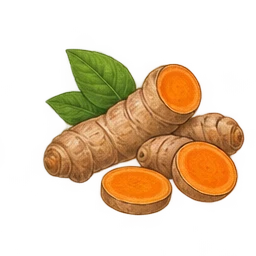
Curcumin is a component of turmeric. Some trials of oral extracts found improvements in knee osteoarthritis symptoms. The delivery system matters when comparing one product with another. [1] [2]
See how this ingredient works with other supplements
Turmeric / Curcumin at a glance
A quick comparison before you explore the details below.
| Form | Common reasons to choose it | Key difference | Explore form |
|---|---|---|---|
| Curcumin Micellar Preparation | Traditional uses*; Joint comfort. | Micellar delivery increased measured total exposure in human comparisons. [2][5] | See Form Details ↓: Curcumin — Micellar Preparation |
| Curcumin Phospholipid Complex | Traditional uses*; Joint comfort. | A studied lecithin complex improved total curcuminoid exposure versus its unformulated comparator. [3] | See Form Details ↓: Curcumin — Phospholipid Complex |
| Curcumin Piperine Combination | Traditional uses*; Joint comfort. | Piperine improved exposure in an early human study; later comparisons have not consistently shown the same advantage. [2][4] | See Form Details ↓: Curcumin — Piperine Combination |
| Curcumin Standard Extract | Traditional uses*; Joint comfort. | Unformulated extract provides a useful baseline with relatively low exposure in comparative studies. [2][5] | See Form Details ↓: Curcumin — Standard Extract |
Explore each form
Product-label examples help you compare available strengths. The appropriate daily amount depends on your needs; formulations and availability vary by country.
Curcumin — Micellar Preparation
Curcumin formulation
Botanical illustration
HerbCommon Uses
Traditional uses*: Turmeric has a history of customary use for indigestion and joint complaints; concentrated curcumin products differ from the traditional herb.
Joint comfort: Curcumin preparations may modestly improve knee osteoarthritis pain and function; evidence remains preliminary.
Metabolic research: Studied for fatty-liver and inflammatory markers, with inconsistent results.
Preparation matters: Benefits depend on the extract tested. Greater absorption does not automatically establish better symptom relief.
Sources: NCCIH: turmeric · Knee osteoarthritis review
Common OTC Strengths
Preparation-specific; compare declared curcuminoids rather than micellar blend weight.
Label sources: 1
Look for the name of the delivery system and the amount of curcuminoids per serving. If the label lists the weight of the whole complex, look for a separate curcuminoid amount so you can compare products.
No general maximum is stated for this preparation. Check its specific safety guidance below.
* See additional info below: Curcumin — Micellar Preparation safety details. Upper limits are safety ceilings, not intake targets. Age and health conditions affect suitability.
How and Safety
Curcumin affects several inflammation-related signals in laboratory research. These actions may contribute to symptom effects, but a mechanism or higher absorption alone does not prove a product works better. [1]
Follow the specific formulation’s directions; standard and enhanced-absorption extracts are not dose-equivalent. [8]
Compare the exact formulation when changing products; equal milligrams may differ. Review interactions if you take medicines. [2]
Trusted Sources
Simple tests to be certain of your individual needs.
Coming soon
Additional Ingredient Information: Common or Studied Dosage, Safety & Toxicity
Common Uses & Evidence
Research on joint symptoms and other goals uses different preparations. Match the exact formulation and clinical outcome to the choice being considered. [1]
Taking supplements together
Curcumin and boswellia for knee comfort
References
- NCCIH — Turmeric
- Fança-Berthon et al. 2021 — Curcuminoid Pharmacokinetics by Formulation
- Cuomo et al. 2011 — Standardized Curcuminoid Mixture and Lecithin Formulation
- Shoba et al. 1998 — Piperine and Curcumin Pharmacokinetics
- Flory et al. 2021 — Curcumin Formulation Crossover Trial
- 2025 — Curcumin Formulations: Pharmacokinetic Study and Critical Reappraisal
Form Type
Curcumin formulation
Bioavailability & Absorption
Common or Studied Dosage
Interactions
Review medicines and the complete formulation with a pharmacist. Piperine combinations require specific interaction review. [1]
Side Effects
Digestive upset, nausea, reflux or diarrhea can occur. [1]
Safety & Toxicity
Concentrated and enhanced-absorption turmeric products have been linked to liver injury. Stop use and seek medical advice for jaundice or other signs of liver problems. [1]
How and Safety — Details & Sources
The mechanism describes how an ingredient could work. Human studies can tell us which benefits people experience with a particular preparation.
Read the Safety & Toxicity and Interactions sections, where available, for further precautions. The preparation and other ingredients matter.
How and Safety — Sources
- Memorial Sloan Kettering — Turmeric / Curcumin: mechanism and clinical context
- NCCIH — Turmeric
- Fança-Berthon et al. 2021 — Curcuminoid Pharmacokinetics by Formulation
- Cuomo et al. 2011 — Standardized Curcuminoid Mixture and Lecithin Formulation
- Shoba et al. 1998 — Piperine and Curcumin Pharmacokinetics
- Flory et al. 2021 — Curcumin Formulation Crossover Trial
- 2025 — Curcumin Formulations: Pharmacokinetic Study and Critical Reappraisal
- Product label example — follow directions for your own preparation
Further Form Considerations
Preparation & Equivalency
A formulation family does not establish equivalence between every brand or dose.
Curcumin — Phospholipid Complex
Curcumin formulation
Botanical illustration
HerbCommon Uses
Traditional uses*: Turmeric has a history of customary use for indigestion and joint complaints; concentrated curcumin products differ from the traditional herb.
Joint comfort: Curcumin preparations may modestly improve knee osteoarthritis pain and function; evidence remains preliminary.
Metabolic research: Studied for fatty-liver and inflammatory markers, with inconsistent results.
Preparation matters: Benefits depend on the extract tested. Greater absorption does not automatically establish better symptom relief.
Sources: NCCIH: turmeric · Knee osteoarthritis review
Common OTC Strengths
500 mg phytosome complex supplying 90 mg curcuminoids in a checked product.
Label sources: 1
Read the curcuminoid amount per serving. The phospholipid complex includes other material, so its total weight can be higher. Check the phospholipid source and the allergen statement.
No general maximum is stated for this preparation. Check its specific safety guidance below.
* See additional info below: Curcumin — Phospholipid Complex safety details. Upper limits are safety ceilings, not intake targets. Age and health conditions affect suitability.
How and Safety
Curcumin affects several inflammation-related signals in laboratory research. These actions may contribute to symptom effects, but a mechanism or higher absorption alone does not prove a product works better. [1]
Follow the specific formulation’s directions; standard and enhanced-absorption extracts are not dose-equivalent. [8]
Compare the exact formulation when changing products; equal milligrams may differ. Review interactions if you take medicines. [2]
Trusted Sources
Simple tests to be certain of your individual needs.
Coming soon
Additional Ingredient Information: Common or Studied Dosage, Safety & Toxicity
Common Uses & Evidence
Research on joint symptoms and other goals uses different preparations. Match the exact formulation and clinical outcome to the choice being considered. [1]
Taking supplements together
Curcumin and boswellia for knee comfort
References
- NCCIH — Turmeric
- Fança-Berthon et al. 2021 — Curcuminoid Pharmacokinetics by Formulation
- Cuomo et al. 2011 — Standardized Curcuminoid Mixture and Lecithin Formulation
- Shoba et al. 1998 — Piperine and Curcumin Pharmacokinetics
- Flory et al. 2021 — Curcumin Formulation Crossover Trial
- 2025 — Curcumin Formulations: Pharmacokinetic Study and Critical Reappraisal
Form Type
Curcumin formulation
Bioavailability & Absorption
A studied lecithin complex improved total curcuminoid exposure versus its unformulated comparator. [3]
Common or Studied Dosage
Interactions
Review medicines and the complete formulation with a pharmacist. Piperine combinations require specific interaction review. [1]
Side Effects
Digestive upset, nausea, reflux or diarrhea can occur. [1]
Safety & Toxicity
Concentrated and enhanced-absorption turmeric products have been linked to liver injury. Stop use and seek medical advice for jaundice or other signs of liver problems. [1]
How and Safety — Details & Sources
The mechanism describes how an ingredient could work. Human studies can tell us which benefits people experience with a particular preparation.
Read the Safety & Toxicity and Interactions sections, where available, for further precautions. The preparation and other ingredients matter.
How and Safety — Sources
- Memorial Sloan Kettering — Turmeric / Curcumin: mechanism and clinical context
- NCCIH — Turmeric
- Fança-Berthon et al. 2021 — Curcuminoid Pharmacokinetics by Formulation
- Cuomo et al. 2011 — Standardized Curcuminoid Mixture and Lecithin Formulation
- Shoba et al. 1998 — Piperine and Curcumin Pharmacokinetics
- Flory et al. 2021 — Curcumin Formulation Crossover Trial
- 2025 — Curcumin Formulations: Pharmacokinetic Study and Critical Reappraisal
- Product label example — follow directions for your own preparation
Further Form Considerations
Preparation & Equivalency
A formulation family does not establish equivalence between every brand or dose.
Curcumin — Piperine Combination
Curcumin formulation
Botanical illustration
HerbCommon Uses
Traditional uses*: Turmeric has a history of customary use for indigestion and joint complaints; concentrated curcumin products differ from the traditional herb.
Joint comfort: Curcumin preparations may modestly improve knee osteoarthritis pain and function; evidence remains preliminary.
Metabolic research: Studied for fatty-liver and inflammatory markers, with inconsistent results.
Preparation matters: Benefits depend on the extract tested. Greater absorption does not automatically establish better symptom relief.
Sources: NCCIH: turmeric · Knee osteoarthritis review
Common OTC Strengths
658 mg turmeric extract supplying 625 mg curcuminoids, plus 5 mg piperine, in a checked product.
Label sources: 1
Read the curcuminoid and piperine amounts separately. Piperine comes from black pepper extract and can affect how your body handles medicines.
No general maximum is stated for this preparation. Check its specific safety guidance below.
* See additional info below: Curcumin — Piperine Combination safety details. Upper limits are safety ceilings, not intake targets. Age and health conditions affect suitability.
How and Safety
Curcumin affects several inflammation-related signals in laboratory research. These actions may contribute to symptom effects, but a mechanism or higher absorption alone does not prove a product works better. [1]
Follow the specific formulation’s directions; standard and enhanced-absorption extracts are not dose-equivalent. [8]
Do not add piperine-enhanced curcumin to medicines without pharmacist review; piperine can change drug exposure. [2]
Trusted Sources
Simple tests to be certain of your individual needs.
Coming soon
Additional Ingredient Information: Common or Studied Dosage, Safety & Toxicity
Common Uses & Evidence
Research on joint symptoms and other goals uses different preparations. Match the exact formulation and clinical outcome to the choice being considered. [1]
Taking supplements together
Curcumin and boswellia for knee comfort
References
- NCCIH — Turmeric
- Fança-Berthon et al. 2021 — Curcuminoid Pharmacokinetics by Formulation
- Cuomo et al. 2011 — Standardized Curcuminoid Mixture and Lecithin Formulation
- Shoba et al. 1998 — Piperine and Curcumin Pharmacokinetics
- Flory et al. 2021 — Curcumin Formulation Crossover Trial
- 2025 — Curcumin Formulations: Pharmacokinetic Study and Critical Reappraisal
Form Type
Curcumin formulation
Bioavailability & Absorption
Common or Studied Dosage
Interactions
Review medicines and the complete formulation with a pharmacist. Piperine combinations require specific interaction review. [1]
Side Effects
Digestive upset, nausea, reflux or diarrhea can occur. [1]
Safety & Toxicity
Concentrated and enhanced-absorption turmeric products have been linked to liver injury. Stop use and seek medical advice for jaundice or other signs of liver problems. [1]
How and Safety — Details & Sources
The mechanism describes how an ingredient could work. Human studies can tell us which benefits people experience with a particular preparation.
Read the Safety & Toxicity and Interactions sections, where available, for further precautions. The preparation and other ingredients matter.
How and Safety — Sources
- Memorial Sloan Kettering — Turmeric / Curcumin: mechanism and clinical context
- NCCIH — Turmeric
- Fança-Berthon et al. 2021 — Curcuminoid Pharmacokinetics by Formulation
- Cuomo et al. 2011 — Standardized Curcuminoid Mixture and Lecithin Formulation
- Shoba et al. 1998 — Piperine and Curcumin Pharmacokinetics
- Flory et al. 2021 — Curcumin Formulation Crossover Trial
- 2025 — Curcumin Formulations: Pharmacokinetic Study and Critical Reappraisal
- Product label example — follow directions for your own preparation
Further Form Considerations
Preparation & Equivalency
A formulation family does not establish equivalence between every brand or dose.
Curcumin — Standard Extract
Curcumin formulation
Botanical illustration
HerbCommon Uses
Traditional uses*: Turmeric has a history of customary use for indigestion and joint complaints; concentrated curcumin products differ from the traditional herb.
Joint comfort: Curcumin preparations may modestly improve knee osteoarthritis pain and function; evidence remains preliminary.
Metabolic research: Studied for fatty-liver and inflammatory markers, with inconsistent results.
Preparation matters: Benefits depend on the extract tested. Greater absorption does not automatically establish better symptom relief.
Sources: NCCIH: turmeric · Knee osteoarthritis review
Common OTC Strengths
665 mg turmeric extract supplying 630 mg curcuminoids in a checked product.
Label sources: 1
Check whether the product is turmeric root powder or an extract. For an extract, read the milligrams per serving and the percentage identified as curcuminoids. Equal amounts of powder and extract can have different concentrations.
No general maximum is stated for this preparation. Check its specific safety guidance below.
* See additional info below: Curcumin — Standard Extract safety details. Upper limits are safety ceilings, not intake targets. Age and health conditions affect suitability.
How and Safety
Curcumin affects several inflammation-related signals in laboratory research. These actions may contribute to symptom effects, but a mechanism or higher absorption alone does not prove a product works better. [1]
Follow the specific formulation’s directions; standard and enhanced-absorption extracts are not dose-equivalent. [8]
Compare the exact formulation when changing products; equal milligrams may differ. Review interactions if you take medicines. [2]
Trusted Sources
Simple tests to be certain of your individual needs.
Coming soon
Additional Ingredient Information: Common or Studied Dosage, Safety & Toxicity
Common Uses & Evidence
Research on joint symptoms and other goals uses different preparations. Match the exact formulation and clinical outcome to the choice being considered. [1]
Taking supplements together
Curcumin and boswellia for knee comfort
References
- NCCIH — Turmeric
- Fança-Berthon et al. 2021 — Curcuminoid Pharmacokinetics by Formulation
- Cuomo et al. 2011 — Standardized Curcuminoid Mixture and Lecithin Formulation
- Shoba et al. 1998 — Piperine and Curcumin Pharmacokinetics
- Flory et al. 2021 — Curcumin Formulation Crossover Trial
- 2025 — Curcumin Formulations: Pharmacokinetic Study and Critical Reappraisal
Form Type
Curcumin formulation
Bioavailability & Absorption
Common or Studied Dosage
Interactions
Review medicines and the complete formulation with a pharmacist. Piperine combinations require specific interaction review. [1]
Side Effects
Digestive upset, nausea, reflux or diarrhea can occur. [1]
Safety & Toxicity
Concentrated and enhanced-absorption turmeric products have been linked to liver injury. Stop use and seek medical advice for jaundice or other signs of liver problems. [1]
How and Safety — Details & Sources
The mechanism describes how an ingredient could work. Human studies can tell us which benefits people experience with a particular preparation.
Read the Safety & Toxicity and Interactions sections, where available, for further precautions. The preparation and other ingredients matter.
How and Safety — Sources
- Memorial Sloan Kettering — Turmeric / Curcumin: mechanism and clinical context
- NCCIH — Turmeric
- Fança-Berthon et al. 2021 — Curcuminoid Pharmacokinetics by Formulation
- Cuomo et al. 2011 — Standardized Curcuminoid Mixture and Lecithin Formulation
- Shoba et al. 1998 — Piperine and Curcumin Pharmacokinetics
- Flory et al. 2021 — Curcumin Formulation Crossover Trial
- 2025 — Curcumin Formulations: Pharmacokinetic Study and Critical Reappraisal
- Product label example — follow directions for your own preparation
Further Form Considerations
Preparation & Equivalency
A formulation family does not establish equivalence between every brand or dose.
*Traditional uses: Documented customary uses help explain why people choose an ingredient. This history of use is distinct from clinical-trial findings; the evidence for each use is described above.
Turmeric / Curcumin — common questions
Is a turmeric spice serving equivalent to a curcumin capsule?
Turmeric contains curcumin alongside other compounds. Extracts concentrate particular constituents, and some formulations increase absorption. A spoonful of spice cannot be converted reliably into a capsule dose. NIH reference
What is Turmeric / Curcumin commonly used for?
Curcumin — Micellar Preparation
Traditional uses*: Turmeric has a history of customary use for indigestion and joint complaints; concentrated curcumin products differ from the traditional herb.
Joint comfort: Curcumin preparations may modestly improve knee osteoarthritis pain and function; evidence remains preliminary.
Metabolic research: Studied for fatty-liver and inflammatory markers, with inconsistent results.
Preparation matters: Benefits depend on the extract tested. Greater absorption does not automatically establish better symptom relief.
Sources: NCCIH: turmeric · Knee osteoarthritis review
How well is Turmeric / Curcumin absorbed?
Curcumin — Micellar Preparation
Micellar delivery increased measured total exposure in human comparisons. [2][5]
Curcumin — Phospholipid Complex
A studied lecithin complex improved total curcuminoid exposure versus its unformulated comparator. [3]
Curcumin — Piperine Combination
Piperine improved exposure in an early human study; later comparisons have not consistently shown the same advantage. [2][4]
Curcumin — Standard Extract
Unformulated extract provides a useful baseline with relatively low exposure in comparative studies. [2][5]
What should I look for on the label for Turmeric / Curcumin?
Curcumin — Micellar Preparation
Look for the name of the delivery system and the amount of curcuminoids per serving. If the label lists the weight of the whole complex, look for a separate curcuminoid amount so you can compare products.
Curcumin — Phospholipid Complex
Read the curcuminoid amount per serving. The phospholipid complex includes other material, so its total weight can be higher. Check the phospholipid source and the allergen statement.
Curcumin — Piperine Combination
Read the curcuminoid and piperine amounts separately. Piperine comes from black pepper extract and can affect how your body handles medicines.
Curcumin — Standard Extract
Check whether the product is turmeric root powder or an extract. For an extract, read the milligrams per serving and the percentage identified as curcuminoids. Equal amounts of powder and extract can have different concentrations.
Which medicines or supplements can interact with Turmeric / Curcumin?
Curcumin — Micellar Preparation
Review medicines and the complete formulation with a pharmacist. Piperine combinations require specific interaction review. [1]
What side effects can Turmeric / Curcumin cause?
Curcumin — Micellar Preparation
Digestive upset, nausea, reflux or diarrhea can occur. [1]
Who should take extra care with Turmeric / Curcumin?
Curcumin — Micellar Preparation
Concentrated and enhanced-absorption turmeric products have been linked to liver injury. Stop use and seek medical advice for jaundice or other signs of liver problems. [1]
How does Turmeric / Curcumin work?
Curcumin — Micellar Preparation
Curcumin affects several inflammation-related signals in laboratory research. These actions may contribute to symptom effects, but a mechanism or higher absorption alone does not prove a product works better. [1]
What strengths of Turmeric / Curcumin appear on supplement labels?
Curcumin — Micellar Preparation
Preparation-specific; compare declared curcuminoids rather than micellar blend weight.
Label sources: 1
Curcumin — Phospholipid Complex
500 mg phytosome complex supplying 90 mg curcuminoids in a checked product.
Label sources: 1
Curcumin — Piperine Combination
658 mg turmeric extract supplying 625 mg curcuminoids, plus 5 mg piperine, in a checked product.
Label sources: 1
Curcumin — Standard Extract
665 mg turmeric extract supplying 630 mg curcuminoids in a checked product.
Label sources: 1
Are different preparations of Turmeric / Curcumin interchangeable?
Curcumin — Micellar Preparation
A formulation family does not establish equivalence between every brand or dose.
What should I know about combining Turmeric / Curcumin with other supplements?
Additional ingredient information
Common Forms
Conventional extracts and enhanced-delivery formulations need individual comparison.
Common Uses
Curcumin is a component of turmeric. Some trials of oral extracts found improvements in knee osteoarthritis symptoms. The delivery system matters when comparing one product with another. [1]
Upper Limit and Toxicity
Digestive side effects can occur. Liver injury has been reported with some enhanced-bioavailability formulations; stop and seek care for dark urine or jaundice. [1]
References
- NCCIH — Turmeric
- Fança-Berthon et al. 2021 — Curcuminoid Pharmacokinetics by Formulation
- Cuomo et al. 2011 — Standardized Curcuminoid Mixture and Lecithin Formulation
- Shoba et al. 1998 — Piperine and Curcumin Pharmacokinetics
- Flory et al. 2021 — Curcumin Formulation Crossover Trial
- 2025 — Curcumin Formulations: Pharmacokinetic Study and Critical Reappraisal
- Turmeric