
Explore Lion’s Mane
See how this form is used, what to look for on the label, and where to find it.
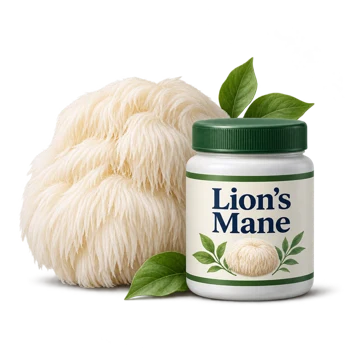
Lion’s mane has traditional uses and is being studied for memory and thinking. Small human trials have tested particular mushroom preparations, which can differ from the powder or extract on a store shelf. Sources: MSK: lion’s mane
Product-label examples help you compare available strengths. The appropriate daily amount depends on your needs; formulations and availability vary by country.
Lion’s Mane — Preparation Overview
Specialty supplement preparation
Representative illustration. Product appearance varies.
Other SupplementCommon Uses
Traditional uses*: Used in East Asian and other customary medical systems for nervous-system complaints and general well-being.
Memory and thinking: Small trials suggest possible benefits in selected older adults or people with mild cognitive impairment; results are not consistent.
Mood and stress: Preliminary studies report improvements in some stress or mood measures.
Evidence so far: Human research remains limited. It is not an established treatment for dementia, and mushroom powders and concentrated extracts are not interchangeable.
Sources: MSK: lion's mane
Common OTC Strengths
1,000 mg fruiting-body powder per serving in a checked product.
Label sources: 1
Look for Hericium erinaceus (lion’s mane). Check which part is used: the fruiting body or the mycelium. Compare powders with powders and extracts with extracts, and check whether both labels state the beta-glucan content.
No general maximum is stated for this preparation. Check its specific safety guidance below.
* See additional info below: Lion’s Mane — Preparation Overview safety details. Upper limits are safety ceilings, not intake targets. Age and health conditions affect suitability.
How and Safety
Lion’s mane contains compounds that can influence nerve-growth-factor pathways in laboratory and animal studies. This is a proposed explanation for cognitive research, not proof that oral supplements regrow nerves or treat dementia. [1]
Check fruiting body versus mycelium and the extract directions; preparations are not interchangeable. [4]
Stop the product if a rash or other suspected allergic symptoms develop. [2]
Trusted Sources
Simple tests to be certain of your individual needs.
Coming soon
Additional Ingredient Information: Safety & Toxicity
Common Uses & Evidence
A standardized fruiting-body extract has been studied in healthy younger adults. Findings remain preparation-specific, and the best dose and duration need more work. [1]
References
Form Type
Specialty supplement preparation
Bioavailability & Absorption
A numerical absorption band is not assigned to this broad preparation overview.
Side Effects
Abdominal discomfort, nausea and skin rash have been reported in a clinical study of lion’s mane. [2]
Safety & Toxicity
A small clinical trial provides some human tolerability information, although results apply to the particular enriched mycelium product studied. During the 49-week trial, abdominal discomfort, nausea and rash were reported among participants who withdrew. The investigators noted that other medicines made causation difficult to establish. Broader and longer-term safety evidence is still needed before treating different lion’s mane products as interchangeable. [3]
How and Safety — Details & Sources
The mechanism describes how an ingredient could work. Human studies can tell us which benefits people experience with a particular preparation.
Read the Safety & Toxicity and Interactions sections, where available, for further precautions. The preparation and other ingredients matter.
How and Safety — Sources
- Memorial Sloan Kettering — Lion’s Mane: mechanism and clinical context
- 2025 randomized study — Hericium erinaceus, Cognition and Mood
- Prevention of Early Alzheimer’s Disease by Erinacine A-Enriched Hericium erinaceus Mycelia Pilot Double-Blind Placebo-Controlled Study
- Product label example — follow directions for your own preparation
*Traditional uses: Documented customary uses help explain why people choose an ingredient. This history of use is distinct from clinical-trial findings; the evidence for each use is described above.
Lion’s Mane — common questions
What is Lion’s Mane commonly used for?
Traditional uses*: Used in East Asian and other customary medical systems for nervous-system complaints and general well-being.
Memory and thinking: Small trials suggest possible benefits in selected older adults or people with mild cognitive impairment; results are not consistent.
Mood and stress: Preliminary studies report improvements in some stress or mood measures.
Evidence so far: Human research remains limited. It is not an established treatment for dementia, and mushroom powders and concentrated extracts are not interchangeable.
Sources: MSK: lion's mane
How well is Lion’s Mane absorbed?
A numerical absorption band is not assigned to this broad preparation overview.
What should I look for on the label for Lion’s Mane?
Look for Hericium erinaceus (lion’s mane). Check which part is used: the fruiting body or the mycelium. Compare powders with powders and extracts with extracts, and check whether both labels state the beta-glucan content.
What side effects can Lion’s Mane cause?
Abdominal discomfort, nausea and skin rash have been reported in a clinical study of lion’s mane. [2]
Who should take extra care with Lion’s Mane?
A small clinical trial provides some human tolerability information, although results apply to the particular enriched mycelium product studied. During the 49-week trial, abdominal discomfort, nausea and rash were reported among participants who withdrew. The investigators noted that other medicines made causation difficult to establish. Broader and longer-term safety evidence is still needed before treating different lion’s mane products as interchangeable. [3]