
Explore Elderberry
See how this form is used, what to look for on the label, and where to find it.
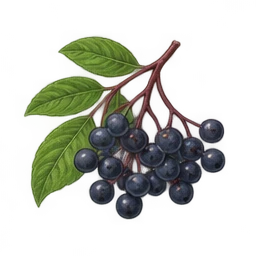
Prepared elderberry fruit is traditionally used for colds and flu. Some small trials have explored symptom relief. Product preparation matters, particularly when comparing fruit extracts with raw plant material. Sources: NIH
See how this ingredient works with other supplements
Product-label examples help you compare available strengths. The appropriate daily amount depends on your needs; formulations and availability vary by country.
Elderberry — Prepared Fruit Product
Botanical preparation
Botanical illustration
HerbCommon Uses
Traditional uses*: Prepared elderberry fruits have long been used in folk medicine for colds and flu.
Cold and flu symptoms: Some small studies suggest elderberry preparations may ease or shorten upper-respiratory symptoms, but the evidence remains preliminary.
Immune-season use: Often taken during cold season; reliable prevention of infection has not been established.
Preparation matters: Research concerns prepared products. Raw or unripe berries and other plant parts can contain harmful compounds.
Sources: NIH
Common OTC Strengths
500 mg elderberry extract in a checked product.
Label sources: 1
Look for prepared Sambucus nigra (elderberry) fruit. Check the extract ratio and added sugars per serving. Avoid raw or unripe plant preparations.
No general maximum is stated for this preparation. Check its specific safety guidance below.
* See additional info below: Elderberry — Prepared Fruit Product safety details. Upper limits are safety ceilings, not intake targets. Age and health conditions affect suitability.
How and Safety
Elderberry contains anthocyanins and other compounds studied for effects on inflammatory and antiviral pathways. Most mechanistic findings are laboratory-based, and they do not establish prevention or treatment of viral infections in people. [1]
Use a properly processed commercial fruit preparation according to its instructions. [3]
Do not consume raw or unripe berries, leaves or stems, or rely on elderberry for infection treatment. [2]
Use properly prepared fruit products. Raw or unripe berries, leaves and stems can be toxic. [2]
Trusted Sources
Simple tests to be certain of your individual needs.
Coming soon
Additional Ingredient Information: Safety & Toxicity
Common Uses & Evidence
Small studies suggest possible symptom relief; the evidence is preliminary. It is not an established prevention or treatment for COVID-19. [1]
Taking supplements together
References
Form Type
Botanical preparation
Bioavailability & Absorption
A comparative dot score is not assigned to this broad preparation category.
Interactions
Review medicines and the complete product formulation. [1]
Safety & Toxicity
Raw or unripe berries, leaves and stems contain toxic compounds. Use a properly prepared product; pregnancy and breastfeeding safety is uncertain. [1]
How and Safety — Details & Sources
The mechanism describes how an ingredient could work. Human studies can tell us which benefits people experience with a particular preparation.
Read the Safety & Toxicity and Interactions sections, where available, for further precautions. The preparation and other ingredients matter.
How and Safety — Sources
Further Form Considerations
Use properly prepared fruit products. Raw or unripe berries, leaves and stems can be toxic.
Sources: 1
*Traditional uses: Documented customary uses help explain why people choose an ingredient. This history of use is distinct from clinical-trial findings; the evidence for each use is described above.
Elderberry — common questions
What is Elderberry commonly used for?
Traditional uses*: Prepared elderberry fruits have long been used in folk medicine for colds and flu.
Cold and flu symptoms: Some small studies suggest elderberry preparations may ease or shorten upper-respiratory symptoms, but the evidence remains preliminary.
Immune-season use: Often taken during cold season; reliable prevention of infection has not been established.
Preparation matters: Research concerns prepared products. Raw or unripe berries and other plant parts can contain harmful compounds.
Sources: NIH
How well is Elderberry absorbed?
A comparative dot score is not assigned to this broad preparation category.
What should I look for on the label for Elderberry?
Look for prepared Sambucus nigra (elderberry) fruit. Check the extract ratio and added sugars per serving. Avoid raw or unripe plant preparations.
Which medicines or supplements can interact with Elderberry?
Review medicines and the complete product formulation. [1]
Who should take extra care with Elderberry?
Raw or unripe berries, leaves and stems contain toxic compounds. Use a properly prepared product; pregnancy and breastfeeding safety is uncertain. [1]