
Explore Black Cohosh
See how this form is used, what to look for on the label, and where to find it.
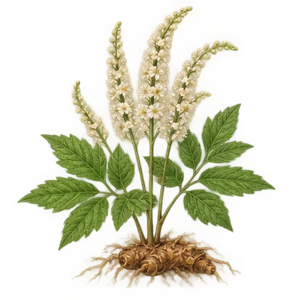
Certain black cohosh extracts have been studied for menopausal symptoms, including hot flashes. The root or rhizome extract and the other ingredients in the preparation matter. [1]
See how this ingredient works with other supplements
Product-label examples help you compare available strengths. The appropriate daily amount depends on your needs; formulations and availability vary by country.
Black Cohosh — Root / Rhizome Extract
Botanical preparation
Botanical illustration
HerbCommon Uses
Menopause symptoms: Certain black cohosh extracts may improve overall menopausal symptoms, including hot flashes; results vary across products.
Hot flashes during cancer treatment: This has been studied, but benefit is uncertain and use needs the treating team's review.
What to expect: Evidence is stronger for selected menopause symptoms than for anxiety, depression or other proposed uses.
Preparation matters: Most findings concern defined extracts. Black cohosh and blue cohosh are different plants and are not interchangeable.
Sources: NIH
Common OTC Strengths
80 mg standardized black cohosh extract in a checked product.
Label sources: 1
Look for Actaea racemosa or Cimicifuga racemosa and the words root or rhizome. Compare products made from the same part and check how the extract is described and which other herbs are included.
No general maximum is stated for this preparation. Check its specific safety guidance below.
* See additional info below: Black Cohosh — Root / Rhizome Extract safety details. Upper limits are safety ceilings, not intake targets. Age and health conditions affect suitability.
How and Safety
Black cohosh may influence serotonin and other nerve-signaling pathways involved in menopause symptoms. Its mechanism is not fully understood, and it should not be described simply as replacing estrogen. [1]
Use a clearly identified black cohosh preparation and reassess persistent symptoms with a clinician. [3]
Stop use and obtain medical advice if symptoms of liver injury develop. [2]
Rare liver-injury reports warrant caution. Stop and seek advice for liver symptoms; avoid pregnancy or breastfeeding use without specialist guidance. [2]
Trusted Sources
Simple tests to be certain of your individual needs.
Coming soon
Additional Ingredient Information: Safety & Toxicity
Common Uses & Evidence
A recent review found potential benefit for overall menopause symptoms and hot flashes. Results depend on the preparation and study. [1]
Taking supplements together
Black cohosh and St. John’s wort
References
Form Type
Botanical preparation
Bioavailability & Absorption
A comparative dot score is not assigned to this broad preparation category.
Interactions
Review medicines and hormone-sensitive conditions with the care team. [1]
Safety & Toxicity
Rare liver-injury reports warrant caution; stop and seek advice for dark urine or other liver symptoms. Pregnancy and breastfeeding use may be unsafe. [1]
How and Safety — Details & Sources
The mechanism describes how an ingredient could work. Human studies can tell us which benefits people experience with a particular preparation.
Read the Safety & Toxicity and Interactions sections, where available, for further precautions. The preparation and other ingredients matter.
How and Safety — Sources
Further Form Considerations
Rare liver-injury reports warrant caution. Stop and seek advice for liver symptoms; avoid pregnancy or breastfeeding use without specialist guidance.
Sources: 1
Black Cohosh — common questions
What is Black Cohosh commonly used for?
Menopause symptoms: Certain black cohosh extracts may improve overall menopausal symptoms, including hot flashes; results vary across products.
Hot flashes during cancer treatment: This has been studied, but benefit is uncertain and use needs the treating team's review.
What to expect: Evidence is stronger for selected menopause symptoms than for anxiety, depression or other proposed uses.
Preparation matters: Most findings concern defined extracts. Black cohosh and blue cohosh are different plants and are not interchangeable.
Sources: NIH
How well is Black Cohosh absorbed?
A comparative dot score is not assigned to this broad preparation category.
What should I look for on the label for Black Cohosh?
Look for Actaea racemosa or Cimicifuga racemosa and the words root or rhizome. Compare products made from the same part and check how the extract is described and which other herbs are included.
Which medicines or supplements can interact with Black Cohosh?
Review medicines and hormone-sensitive conditions with the care team. [1]
Who should take extra care with Black Cohosh?
Rare liver-injury reports warrant caution; stop and seek advice for dark urine or other liver symptoms. Pregnancy and breastfeeding use may be unsafe. [1]
What should I know about combining Black Cohosh with other supplements?
Additional ingredient information
Common Uses
Certain black cohosh extracts have been studied for menopausal symptoms, including hot flashes. The root or rhizome extract and the other ingredients in the preparation matter. [1]
Upper Limit and Toxicity
Rare, sometimes serious liver injuries have been reported with products labeled black cohosh; causation remains uncertain. Seek clinical advice for dark urine or unusual fatigue. Product misidentification and undeclared mixtures have been found. [1]
Contraindications
Pregnancy and breastfeeding use may be unsafe. Safety after hormone-sensitive conditions such as breast or uterine cancer is uncertain. [1]
Chemical Forms
Herbal preparations use the root or rhizome of Actaea racemosa, also called Cimicifuga racemosa. Black cohosh and blue cohosh are different herbs. [1]