
Explore Asian Ginseng
See how this form is used, what to look for on the label, and where to find it.
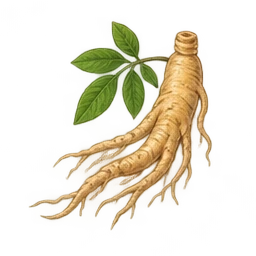
Asian ginseng is traditionally used for vitality. Human studies have explored its effects on fatigue and mental performance, with results depending on the extract and the task. [1]
Form details
See how this ingredient works with other supplements
Product-label examples help you compare available strengths. The appropriate daily amount depends on your needs; formulations and availability vary by country.
Asian Ginseng — Panax Ginseng Root
Botanical root preparation
Botanical illustration
HerbCommon Uses
Fatigue: May offer a small improvement in general fatigue, although studies do not all agree.
Sexual function: Some trials suggest benefits for erectile-function symptoms; this is not an established substitute for assessment or treatment.
Attention and thinking: Small studies suggest possible improvements in selected cognitive tasks, particularly in middle-aged adults.
Blood sugar: Studied for glucose control, with inconsistent results. Most research does not show improved athletic performance.
Sources: NIH
Common OTC Strengths
500 mg root products; a checked serving supplies 1,000 mg.
Label sources: 1
Look for Panax ginseng and check whether the product contains root powder or root extract. For an extract, look for a stated percentage or amount of ginsenosides, compounds in ginseng. Compare products that report the same measure.
No general maximum is stated for this preparation. Check its specific safety guidance below.
* See additional info below: Asian Ginseng — Panax Ginseng Root safety details. Upper limits are safety ceilings, not intake targets. Age and health conditions affect suitability.
How and Safety
Ginseng contains ginsenosides that influence nerve, immune and metabolic signaling in experimental studies. These proposed actions may relate to fatigue or glucose effects, but human responses vary between extracts. [1]
Use directions for Panax ginseng specifically; avoid late-day use if it disrupts your sleep. [3]
Review potential interactions if you take diabetes medicines or warfarin. [2]
Can cause insomnia and affect blood sugar or clotting. Review diabetes medicines and warfarin; pregnancy use may be unsafe. [2]
Trusted Sources
Simple tests to be certain of your individual needs.
Coming soon
Additional Ingredient Information: Safety & Toxicity
Common Uses & Evidence
Researchers have studied whether specific Asian ginseng extracts help fatigue and performance on mental tasks. Most studies followed small groups for a short time. They cannot answer a long-term aging question. [1]
Taking supplements together
References
Form Type
Botanical root preparation
Bioavailability & Absorption
No evidence-based comparative absorption score assigned.
Interactions
Medication check: Asian ginseng may affect blood sugar and blood clotting. If you use diabetes medicines or warfarin, have a pharmacist or clinician review the combination before starting it; studies of Asian ginseng with warfarin have produced mixed results.
Other medicines: Possible interactions with blood-pressure medicines, statins and some antidepressants remain uncertain. Review your specific product and medication list rather than assuming every ginseng preparation behaves alike.
Sources: NCCIH: Asian Ginseng; NCCIH: Herb–Drug Interactions. Reviewed October 24, 2026.
Safety & Toxicity
General nutrient guidance; not a form-specific treatment dose or finding.
Insomnia is common. Blood clotting, blood sugar and autoimmune conditions require review; pregnancy use may be unsafe. [1]
How and Safety — Details & Sources
The mechanism describes how an ingredient could work. Human studies can tell us which benefits people experience with a particular preparation.
Read the Safety & Toxicity and Interactions sections, where available, for further precautions. The preparation and other ingredients matter.
How and Safety — Sources
Further Form Considerations
Can cause insomnia and affect blood sugar or clotting. Review diabetes medicines and warfarin; pregnancy use may be unsafe.
Safety sources: 1
Asian Ginseng — common questions
What is Asian Ginseng commonly used for?
Fatigue: May offer a small improvement in general fatigue, although studies do not all agree.
Sexual function: Some trials suggest benefits for erectile-function symptoms; this is not an established substitute for assessment or treatment.
Attention and thinking: Small studies suggest possible improvements in selected cognitive tasks, particularly in middle-aged adults.
Blood sugar: Studied for glucose control, with inconsistent results. Most research does not show improved athletic performance.
Sources: NIH
How well is Asian Ginseng absorbed?
No evidence-based comparative absorption score assigned.
What should I look for on the label for Asian Ginseng?
Look for Panax ginseng and check whether the product contains root powder or root extract. For an extract, look for a stated percentage or amount of ginsenosides, compounds in ginseng. Compare products that report the same measure.
Which medicines or supplements can interact with Asian Ginseng?
Medication check: Asian ginseng may affect blood sugar and blood clotting. If you use diabetes medicines or warfarin, have a pharmacist or clinician review the combination before starting it; studies of Asian ginseng with warfarin have produced mixed results.
Other medicines: Possible interactions with blood-pressure medicines, statins and some antidepressants remain uncertain. Review your specific product and medication list rather than assuming every ginseng preparation behaves alike.
Sources: NCCIH: Asian Ginseng; NCCIH: Herb–Drug Interactions. Reviewed October 24, 2026.
How does Asian Ginseng work?
Ginseng contains ginsenosides that influence nerve, immune and metabolic signaling in experimental studies. These proposed actions may relate to fatigue or glucose effects, but human responses vary between extracts. [1]
What should I know about combining Asian Ginseng with other supplements?
About Asian Ginseng: intake, safety and evidence
Preparation notes
Red and white Panax ginseng root preparations; not Siberian ginseng.
Upper Limit and Toxicity
Insomnia is common. Blood clotting, blood sugar and autoimmune conditions require review; pregnancy use may be unsafe. [1]