
Explore Ginger
See how this form is used, what to look for on the label, and where to find it.
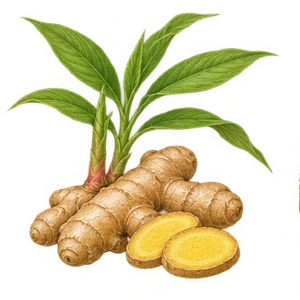
Ginger is traditionally used for nausea and digestive discomfort. Clinical studies have examined specific uses, including nausea in pregnancy and menstrual pain. [1]
Form details
See how this ingredient works with other supplements
Product-label examples help you compare available strengths. The appropriate daily amount depends on your needs; formulations and availability vary by country.
Ginger — Rhizome Preparations
Botanical rhizome / extract
Botanical illustration
HerbCommon Uses
Traditional uses*: Ginger rhizome has long been used for digestive discomfort and nausea. Culinary ginger and concentrated supplements are different preparations.
Menstrual discomfort: Oral ginger may reduce the severity of menstrual cramps.
Joint comfort: Some trials suggest modest relief of knee osteoarthritis symptoms, although study quality varies.
Nausea: Studied as an addition to usual care after surgery or during chemotherapy; benefits in these settings remain uncertain.
Common OTC Strengths
Check whether you are buying ginger powder or a concentrated extract. For an extract, look for a stated amount or percentage of gingerols, compounds found in ginger. Compare like preparations because equal weights can contain different amounts of gingerols.
No general maximum is stated for this preparation. Check its specific safety guidance below.
* See additional info below: Ginger — Rhizome Preparations safety details. Upper limits are safety ceilings, not intake targets. Age and health conditions affect suitability.
How and Safety
Gingerols and shogaols in ginger affect gut movement and nausea-related signaling in laboratory research. These actions may contribute to nausea relief, but effects depend on the preparation and cause of nausea. [1]
Follow directions for the specific oral preparation; food, tea and concentrated extracts differ in strength. [3]
Have a medication review before combining concentrated supplements with blood thinners. [2]
Trusted Sources
Simple tests to be certain of your individual needs.
Coming soon
Additional Ingredient Information: Safety & Toxicity
Common Uses & Evidence
Pregnancy nausea evidence is more encouraging than motion-sickness evidence. Knee osteoarthritis studies are often low quality. [1]
Taking supplements together
References
Form Type
Botanical rhizome / extract
Bioavailability & Absorption
No evidence-based comparative absorption score assigned.
Interactions
Ginger supplements may increase bleeding risk when combined with anticoagulants, antiplatelet medicines or NSAIDs. Potential interactions with glucose-lowering medicines and tacrolimus have also been identified, although their clinical importance is uncertain. Have a pharmacist review concentrated ginger supplements with your medication list. [2]
Side Effects
Oral ginger can cause heartburn, stomach discomfort, diarrhea, or irritation of the mouth and throat. Tolerance can vary with the preparation and amount.
Source: NCCIH — Ginger. Checked October 24, 2026.
Safety & Toxicity
Pregnancy and breastfeeding: Ginger supplements may be suitable during pregnancy, but discuss the product and amount with your pregnancy-care clinician. Safety during breastfeeding is less well studied.
Preparation matters: Many oral studies have reported acceptable tolerability. This does not establish a universal safe dose for concentrated extracts or multi-ingredient products.
Source: NCCIH — Ginger. Checked October 24, 2026.
How and Safety — Details & Sources
The mechanism describes how an ingredient could work. Human studies can tell us which benefits people experience with a particular preparation.
Read the Safety & Toxicity and Interactions sections, where available, for further precautions. The preparation and other ingredients matter.
How and Safety — Sources
*Traditional uses: Documented customary uses help explain why people choose an ingredient. This history of use is distinct from clinical-trial findings; the evidence for each use is described above.
Ginger — common questions
What is Ginger commonly used for?
Traditional uses*: Ginger rhizome has long been used for digestive discomfort and nausea. Culinary ginger and concentrated supplements are different preparations.
Menstrual discomfort: Oral ginger may reduce the severity of menstrual cramps.
Joint comfort: Some trials suggest modest relief of knee osteoarthritis symptoms, although study quality varies.
Nausea: Studied as an addition to usual care after surgery or during chemotherapy; benefits in these settings remain uncertain.
How well is Ginger absorbed?
No evidence-based comparative absorption score assigned.
What should I look for on the label for Ginger?
Check whether you are buying ginger powder or a concentrated extract. For an extract, look for a stated amount or percentage of gingerols, compounds found in ginger. Compare like preparations because equal weights can contain different amounts of gingerols.
Which medicines or supplements can interact with Ginger?
Ginger supplements may increase bleeding risk when combined with anticoagulants, antiplatelet medicines or NSAIDs. Potential interactions with glucose-lowering medicines and tacrolimus have also been identified, although their clinical importance is uncertain. Have a pharmacist review concentrated ginger supplements with your medication list. [2]
What side effects can Ginger cause?
Oral ginger can cause heartburn, stomach discomfort, diarrhea, or irritation of the mouth and throat. Tolerance can vary with the preparation and amount.
Source: NCCIH — Ginger. Checked October 24, 2026.
What should I know about combining Ginger with other supplements?
About Ginger: intake, safety and evidence
Preparation notes
Rhizome powders and extracts; food amounts differ from studied supplements.
Upper Limit and Toxicity
Can cause heartburn, diarrhea, abdominal or mouth irritation. Medication review is needed; pregnancy use should be discussed with a clinician. [1]